
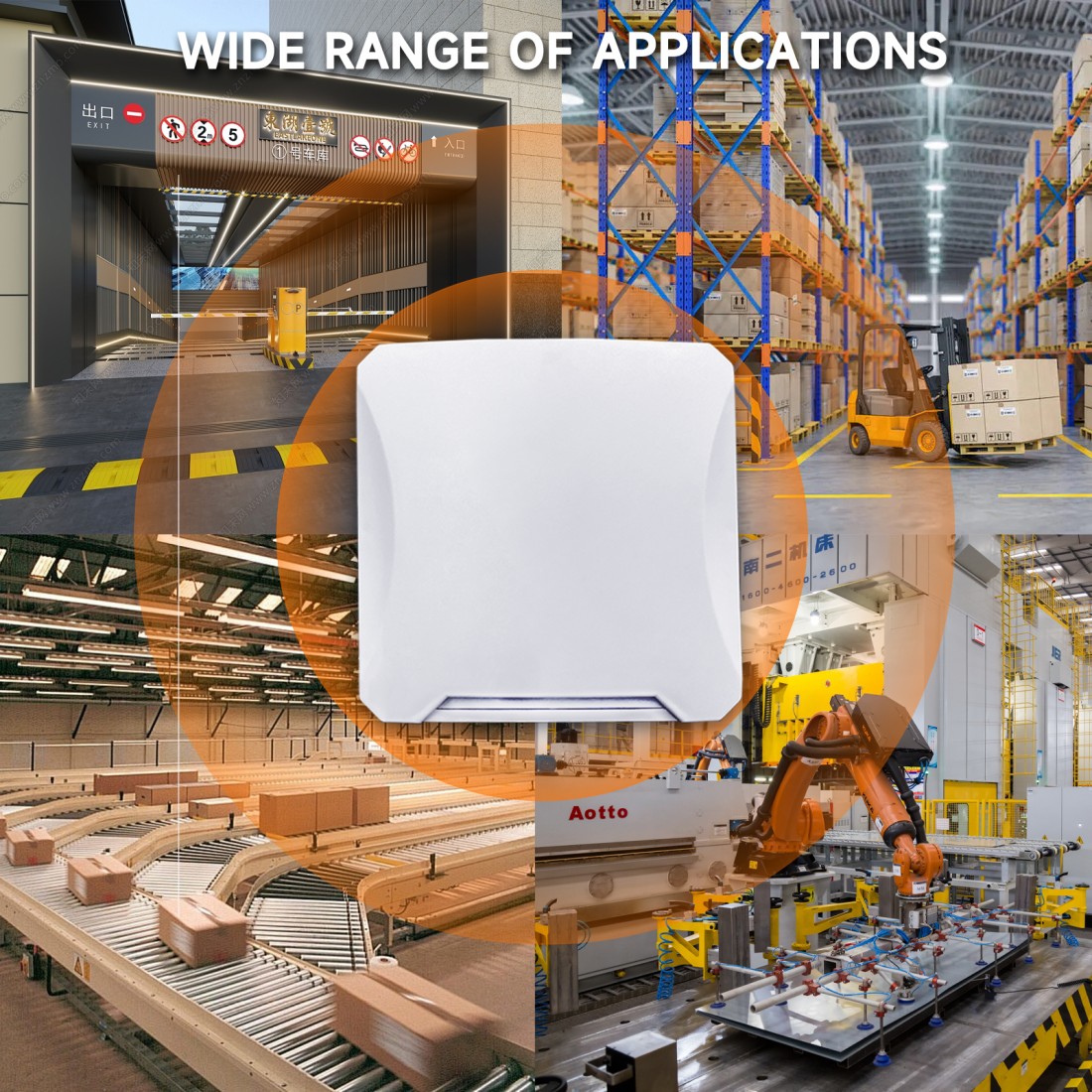
What is the difference between RFID active reader and RFID passive reader?
The main difference between active and passive RFID readers lies in the tags they interact with: Active readers communicate with battery-powered active tags that broadcast signals over long ranges (hundreds of meters) for real-time tracking, while passive readers work with battery-less passive tags that are energized by the reader's signal for short-range (inches to meters) inventory or access control. Active systems offer superior range and continuous updates but cost more; passive systems are cheaper, have virtually unlimited life, and are ideal for bulk item tracking.
Active RFID
- Tag Power: Uses internal batteries to power the tag and transmit signals.
- Range: Long range (up to 300+ feet/90+ meters).
- Communication: Tags actively broadcast their presence and data.
- Cost: Higher cost per tag.
- Best For: Real-time location tracking of high-value assets (vehicles, medical equipment) over large areas.
Passive RFID
- Tag Power: Draws power from the reader's radio waves (no battery).
- Range: Short range (inches to a few meters).
- Communication: Tags "backscatter" the reader's signal to respond.
- Cost: Very low cost per tag.
- Best For: Inventory management, access control, item-level tracking in retail.
Key Distinction Summary
- Active Readers work with tags that send signals; Passive Readers work with tags that receive and reflect signals.
- Choose Active for distance & real-time tracking, Passive for low cost & volume.



Validate your login